Relieving Tension in the Upper Back Through Postural Awareness & Basic Upper Body Movement
Coat hanger pain- tightness and discomfort in the shape of a coat hanger on the upper back- is incredibly common and feels like there is a nagging pull at the base of the skull that extends down and out, and often contributes to head pain and migraines. Due to its connection with posture and movement, it will, infuriatingly so, come and go. You may wake up feeling relieved, only for the tension pattern to start up again as soon as you sit down to eat breakfast.
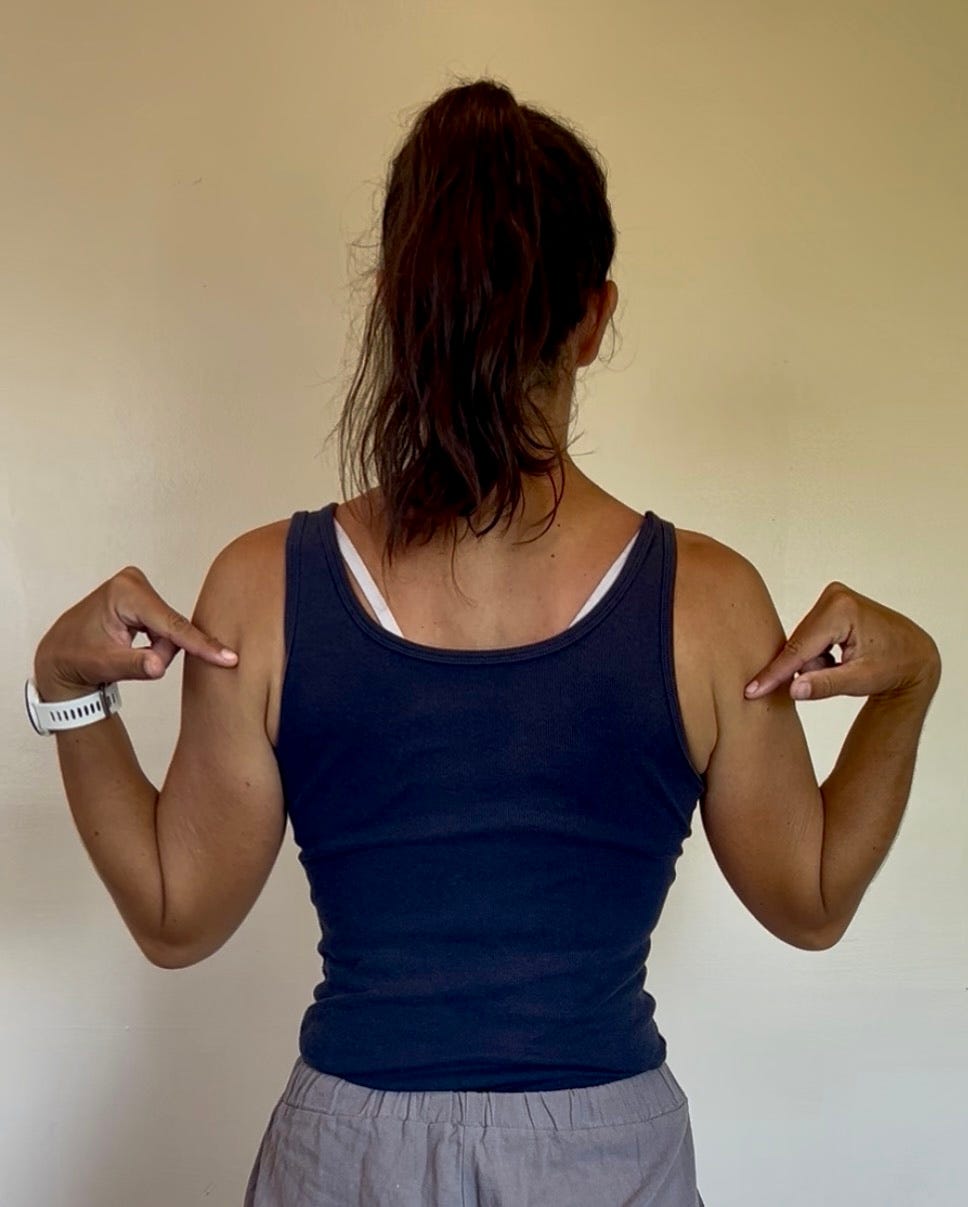
Upper Cross Syndrome
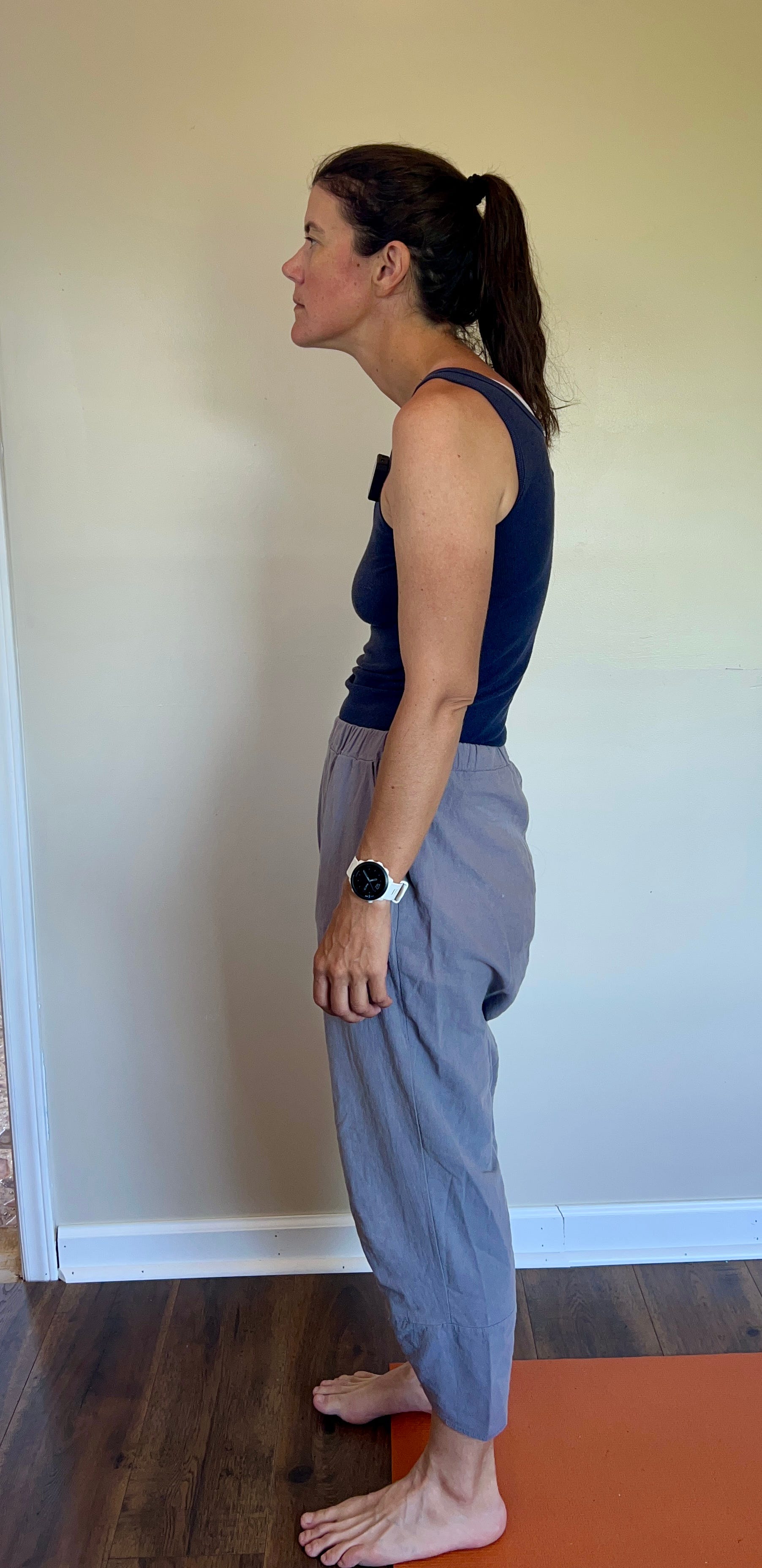
Upper Cross Syndrome is a dysfunctional postural pattern, which I like to call a turtle slump. The imbalances include shortening of the chest and neck muscles, combined with weakness and tightness in the upper back muscles. The result is that an X is formed with the head sticking forward and the upper back humped. The prevalence of Upper Cross Syndrome has increased due to lifestyle changes, including increased screen time and sitting, and decreased upright movement and exercise.
As a dysfunctional postural pattern, upper cross syndrome causes imbalances in the way you sit, stand, and move, meaning that your muscles are not functioning effectively or efficiently. For muscles to work effectively, they need to be at a length that sets the joint in a balanced position. Additionally, they need to be active and engaged at the correct times and in the right amount. Essentially, they need to have elasticity that can react and support daily life and movement.
Muscular dysfunction can include muscles that are too tight, meaning that they are constantly engaged, not allowing the muscle to tighten and loosen, or shorten and lengthen, depending on your needs. In upper cross syndrome, this includes the chest and neck. However, muscles can also be too long and disengaged, resulting in the muscles being unable to shorten and produce movement- imagine a bungee cord that is old and stretched out. In upper cross syndrome, this includes the upper back muscles and spinal stabilizers.
Hypermobility & Upper Cross Syndrome
Joint Hypermobility Syndrome (JHS) and Hypermobile Ehlers-Danlos Syndrome (hEDS) cause joint laxity, resulting in some or all joints in the body having increased range of motion and decreased stability. With a lack of stability comes more challenges in posture and movement, resulting in joints moving beyond a controlled range of motion and exacerbating postural challenges such as Upper Cross Syndrome.
Using a computer or working in a sitting position for long periods of time pushes the body into poor posture, the turtle slump, and if you have hypermobility of any kind in your lower body, upper body, or both, your turtle slump will be even larger due to the increased range of motion in your joints. This results in VERY short neck and chest muscles and very long and weak back and spine muscles.
Upper Cross Syndrome and Coat Hanger Pain
Coat hanger pain is felt in the upper back and neck, and, as a result, the upper back and neck are assumed to be the problem area. However, pain does not mean that this area is the only cause. While areas of weakness and dysfunction can be directly painful, it is often part of a larger pattern. The imbalances of Upper Cross Syndrome cause weakness and dysfunction in the upper body as a whole, causing you to feel pain in the coat hanger area when, in fact, postural dysfunction is the culprit.
Postural Changes
The resolution to coat-hanger pain is rooted in postural adjustments. However, being told to simply stand up straight is not always helpful. True postural changes occur from understanding that posture is a position meant to be sustained and integrated into movement. Refer to Part 1 & Part 2 of How to Build Better Posture for more information.
As a result of improved clarity on posture, our breathing, strength training, and daily movement can incorporate balanced posture that supports a reduction in pain, including coat-hanger pain. Postural changes that specifically apply to coat-hanger pain aim to reduce upper cross syndrome and build more balance through the upper body.
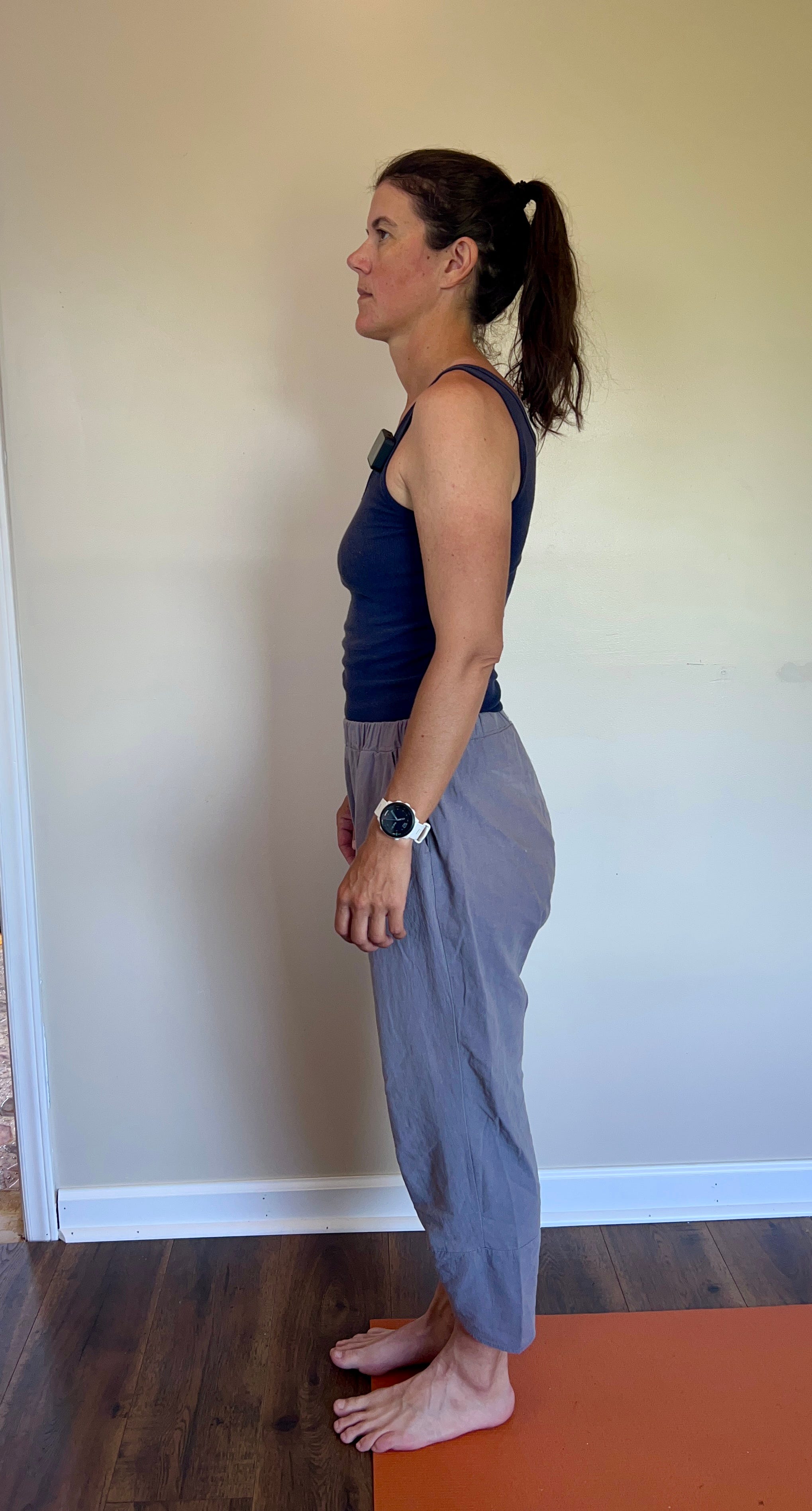
First, let’s address head position. The head should sit directly above the shoulders, balanced on the shoulders with your ears directly over your shoulders. Commonly, this requires you to bring the chin back and lift it so that it is parallel to the ground. By shifting the head, you may immediately feel some relief in the shoulder due to the reduction in pull from the weight of your head.
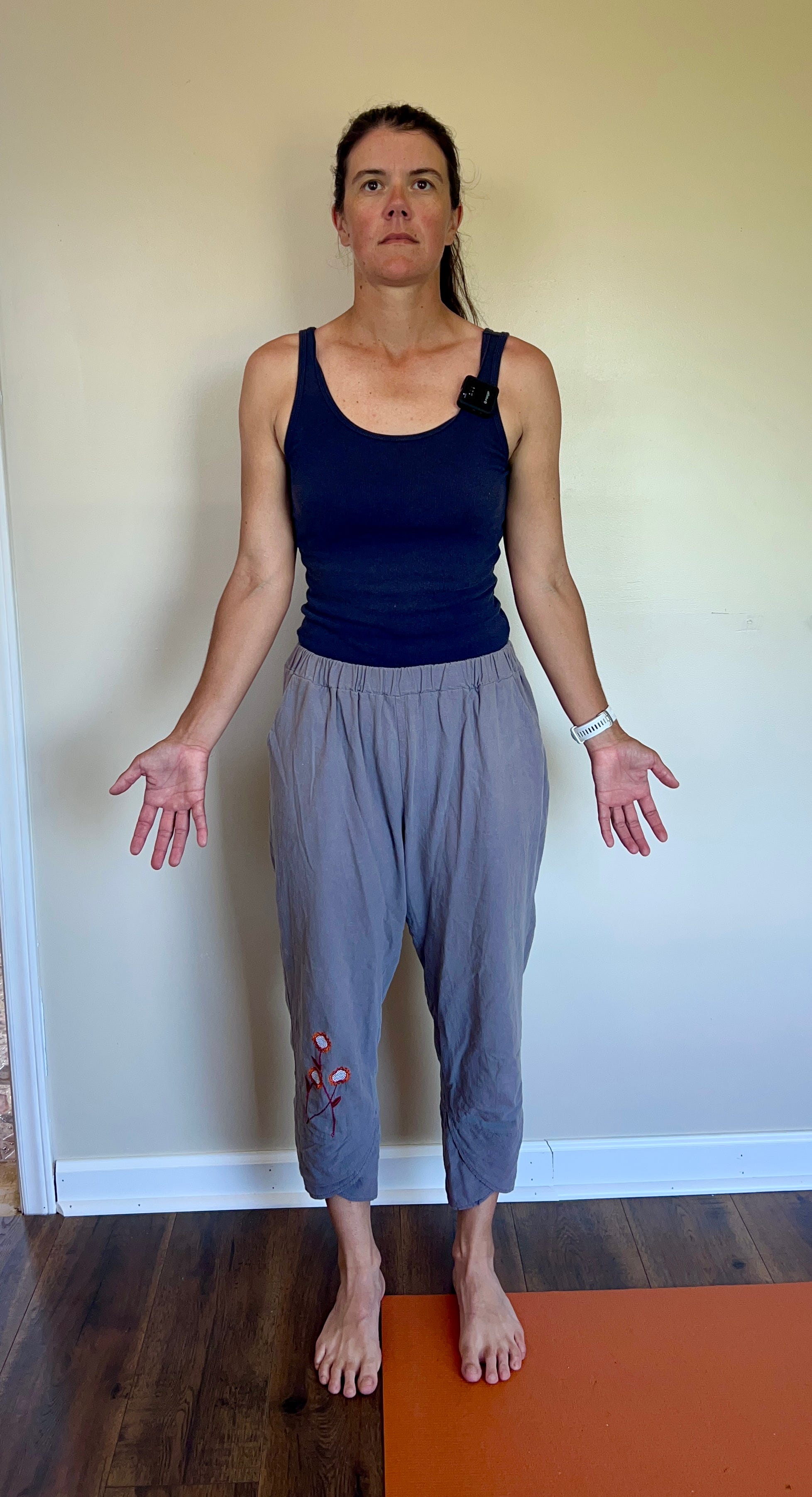
The second shift is to rotate the shoulders externally, and the easiest way to feel this is to stand with your arms by your side and rotate your hands so they are facing forward. This change in rotation helps to set the shoulders in line with the body, encouraging balance in the front and back of the body, lengthening the chest muscles, and shortening/engaging the muscles in the back of the body.
When you first start to think about these changes in your posture and position, they can feel impossible, and in fact, if your posture is significantly out of alignment, they will be! These two changes will require time and pointed progressive work. However, while these changes do not fix upper cross syndrome, as true changes in postural dysfunction come as a result of balanced strength and mobility work, they do help you to find a better balanced position throughout the day. Small changes integrated into everyday life create a large impact on posture and movement patterns.
Basic Strength & Movement
There are several small ways to adjust strength work and movement that are impactful on upper cross syndrome and coat hanger pain. As you would likely guess, they surround upper body posture and movement patterns.
The first is to improve your awareness of your head position. As mentioned above, the position your head is in greatly impacts your shoulders and entire upper body. My favorite head posture awareness exercise is simple and consists of standing leaning against a wall. When you stand with your back against the wall, your head, upper back, and hips will ideally be touching the wall, with your neck and lower back off the wall. Essentially, the wall aligns your head with your body. As you grow more familiar with this position, you learn how to find it off the wall, in exercises, and in daily life.
The second adjustment in movement and strength is to pay special attention to your shoulder joints and shoulder blades. Upper body movement is a complex coordination of the spine, shoulder joints, and shoulder blades. However, upper cross syndrome and generally poor posture often result in the shoulder blades becoming sticky, forcing you to rely on your shoulder joints and lower back for all upper-body movement.
The shoulder blades are on your upper back, and ideally have the ability to move in all directions in a stable and smooth manner. The shoulder joints have a HUGE range of motion, but due to the shoulder blades getting sticky often become overused and tight.
Learning to move your shoulder blades through simple exercises can transform your movement and upper body posture. One of my favorites is to lie flat on your back on the ground, hands by your sides, and palms facing up. While in this position, try feeling where your shoulder blades are sitting. In this position, your shoulder blades will make contact with the floor, which will help improve your awareness of their position. Once you can feel them, see if you can slowly and smoothly move them up and down. Then, try moving them towards each other and away from each other. Remember to go slow and move only through your shoulder blades, inhibiting movement in your spine, arching and rounding.
Movement in the shoulder blades is integral to all upper body strength, and as you learn to create and control movement, your upper body strength will become more effective, reducing upper cross syndrome and reducing coathanger pain.
Naturally, these exercises are just the beginning. To truly find lasting change, you will need to continue improving posture and movement patterns in the upper body, often pinpointing areas in your upper body that are tight, disengaged, or more challenging for you specifically. This takes time and practice, and these two exercises alone will not resolve the problem as a whole. The best changes occur within a whole and cohesive program for overall strength, mobility, and stability.
Breathing
Another tool that impacts upper cross syndrome and coat hanger pain is breathing. Breathing is a way to affect the nervous system and muscular engagement in the body. Ideally, the diaphragm, a muscle that sits under the rib cage spanning horizontally across the body, and the intercostal muscles in the rib cage are the primary muscles utilized in breathing. Accessory muscles for breathing include muscles in the neck, shoulders, chest, and back.
If you struggle with coat-hanger pain, you are more likely to use more secondary breathing muscles than primary ones. By learning to improve your breathing patterns, you will affect your upper-body posture and muscular engagement during daily movement and strength work. Specifically, breathing can help to reduce tension and pain in the torso, aiding you on your quest for better balanced posture and improved muscle engagement.
The simplest exercise to start with is diaphragmatic breathing, or belly breathing, lying on your back. You can begin by placing your hands on your abdomen near your belly button. When you breathe in, you want to feel your belly rise, and as you exhale, your belly should fall. If you are just starting belly breathing, it will take some time to get the feeling and the pattern. As a result, it is important to focus on softening the torso and reducing effort levels to allow yourself the chance to learn a new pattern for breathing.
Eventually, belly breathing can be brought into your daily life, helping to improve your posture, daily movement, and strength work.
Starting From the Ground Up (Literally!)
Changes in posture take time, practice, and progression. Starting from the ground up, literally, allows you to practice a balanced posture in a position where the ground is fully supporting you. As you begin to gain awareness of your shoulders and neck positioning on the ground, you can start to integrate it into standing and sitting positions, and eventually, balanced posture will become a habitual way of moving through the world that decreases coat-hanger pain and helps with overall balanced engagement.
If you are seeking strength building that can serve as a solid foundation for movement and functionality in your life, start by scheduling a free consultation with Chelsea today.