Taking The First Step Towards More Balanced Posture
Good posture has received a lot of attention in strength and fitness, and for good reason- good posture is associated with decreased pain and injury. By definition, posture is the way you stand, sit, and move, and it is the foundation for good movement patterns. If practiced correctly, it will become a part of your movement practice, your strength practice.
However, the discussion of posture brings up a lot of questions.
- What is “good posture”?
- Why can’t I maintain “good posture”?
- Where do I start?
These questions are very valid and important to answer when you are learning to improve your posture. Let’s dig into it!
Thanks for reading Chelsea’s Substack! Subscribe for free to receive new posts and support my work.
What is Good Posture?
Good posture is balanced on all planes. Let’s start by considering the body in two planes.
From the Front
From the Side
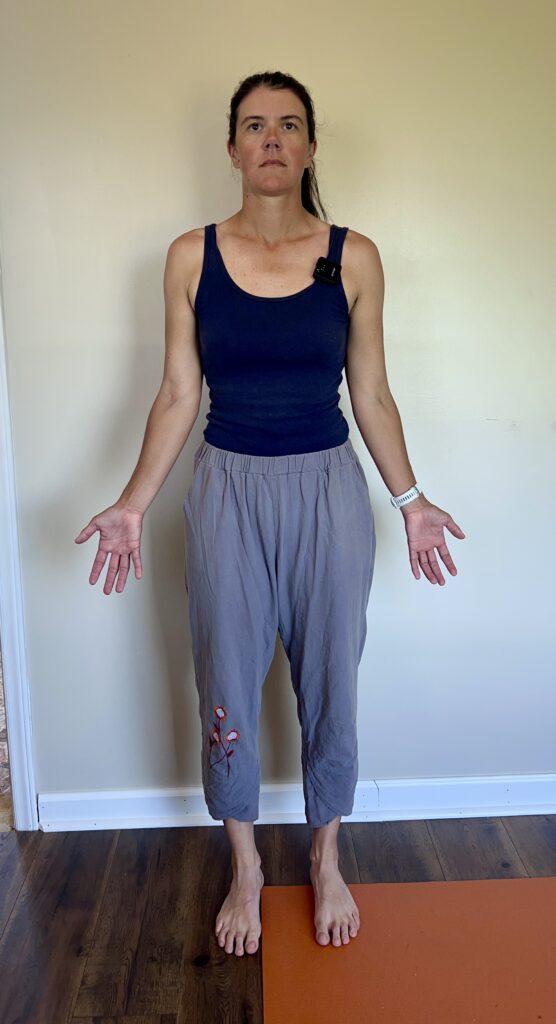
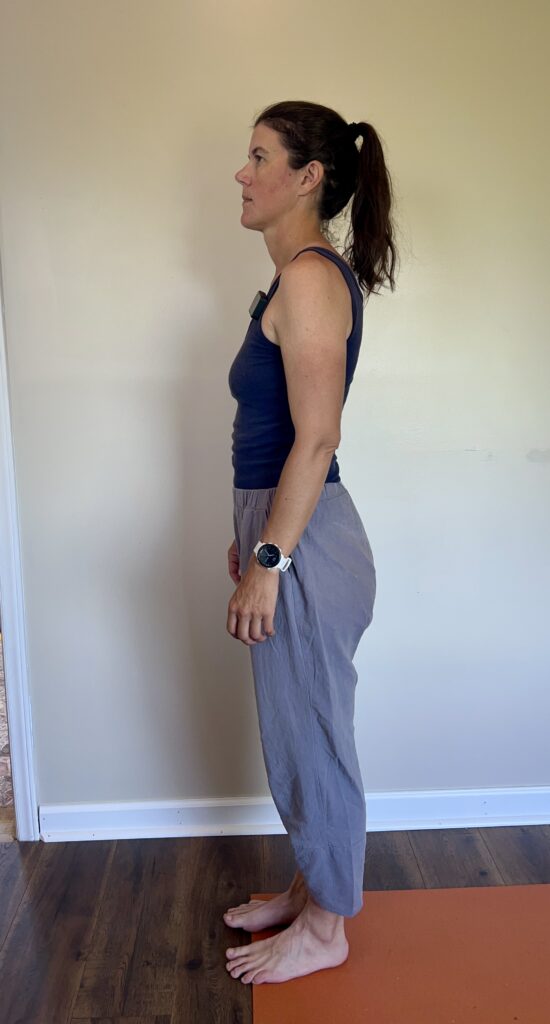
In each of these planes, imagine a line running down the centerline of the body to split the body in half.
- From the front, a balanced posture is when the sides match or are even
- From the sides, a balanced posture is when a line runs through the ear, the center of the shoulder, the hip, and just in front of the ankle
However, good posture is not only about being even, but it is also about supporting the body with correct engagement to HOLD this even position while static. While moving, good posture helps you to engage the correct muscles at the correct time. This means that you are using muscles, tendons, and ligaments in a manner they are meant for, for example, stability muscles for stability. As a result, you have better movement patterns that protect you from injury and help you recover from injury.
Why Can’t I Maintain Good Posture?
In concept, being balanced in the body is relatively simple. However, in practice, it is not. The first step to improving posture is understanding it conceptually, knowing what you are going for. However, understanding does not translate immediately to being able to maintain good posture 100% of the time.
There are two main reasons that you struggle to maintain better posture.
- Muscle memory, a.k.a. habit
- Strength
The way you sit, stand, walk, and move is habitual. These patterns come from how you learned to move as a child, combined with injuries you have had, your mood, and many other factors. Simply understanding the posture you need to hold does not change these patterns, and it is natural for your body to return to the status quo as soon as you shift your attention.
Additionally, improving posture requires a change in the body. For example, imagine taking up a new hobby, like pickleball or gardening. When you first start, you are likely to feel some soreness or muscle fatigue in areas of your body you have not used in this way, such as your forearms from gripping a paddle or a shovel.
Posture is the same. As you change your position, you also change the muscles that are working and how they are working. This change takes time! If you cannot maintain posture, this is commonly partly due to a lack of strength, which can be a result of a lack of muscle activation OR incorrect engagement.
The fix is not magic, it’s practice. Change takes time, patience, and persistence. If you continue to practice better posture and better movement, it will come!
Where Do I Start if I Want to Improve My Posture?
The steps you take to improve your posture matter, and ideally, you will take steps that can build on each other. While the focus of poor posture is commonly slumping shoulders, I suggest starting from the ground up.
Start With the Feet
How you place your feet while standing and moving matters – a lot – and dictates how you engage your lower and upper body.
If you stand up out of your chair right now and turn your toes out to the side, allowing the rest of your body to relax, you will find that your hips naturally push forward, your shoulders slide back, and you hunch.
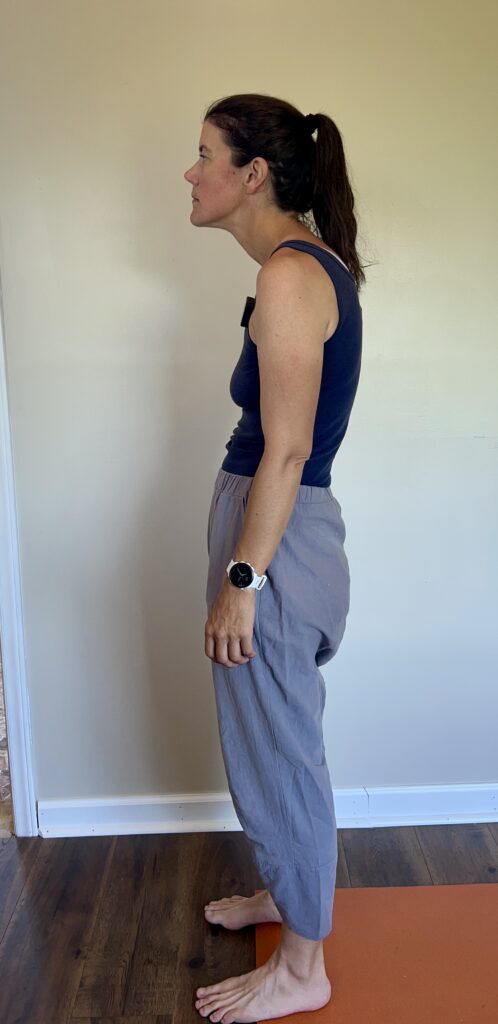
If you stand pigeon-toed, or with your toes turned in, and relax, your hips will likely sit further back, and your shoulders and head will slouch forward.
If you straighten your feet forward, making them parallel to each other, you are creating a solid foundation for your body.
Note: This does not mean you have to stand with your feet perfectly forward in every exercise, as there are many times you can turn your toes out or in to get different muscle engagement.
This is very valuable, first because, as a bipedal animal, your body is designed to walk, to move forward. By turning the feet straight forward evenly, you are able to move more efficiently in your natural gait, walking, or running. Second, by having your feet straight, you engage evenly through the lower body. Without your feet as a solid foundation, you will not be able to become more even and will always be fighting the position your body wants to go to due to your feet’s positioning.
The final focus in the feet is finding a balanced position, where your weight is evenly distributed. This means that you have about the same amount of weight in your left and right foot, and that your weight is sitting evenly in your feet, front to back, centered just in front of the ankle.
This last focus requires that you have weight in your feet, meaning that you feel yourself putting pressure into your feet, pushing away from the ground.
Step 1: Improving Your Posture
The takeaway here is that the first step to improve your posture is to focus on your feet. Find an even position as much and as often as possible to start building the habit of better posture.
Start with the feet AND check out Part 2 to learn more.
Ready to build better posture and strength that supports your life and takes your unique physical challenges, including Hypermobility, Hypermobile EDS, chronic pain, Upper Cross Syndrome, or chronic injuries, into consideration? Sign up for a complimentary consultation with Chelsea today!